Unbound Books
Project Overview
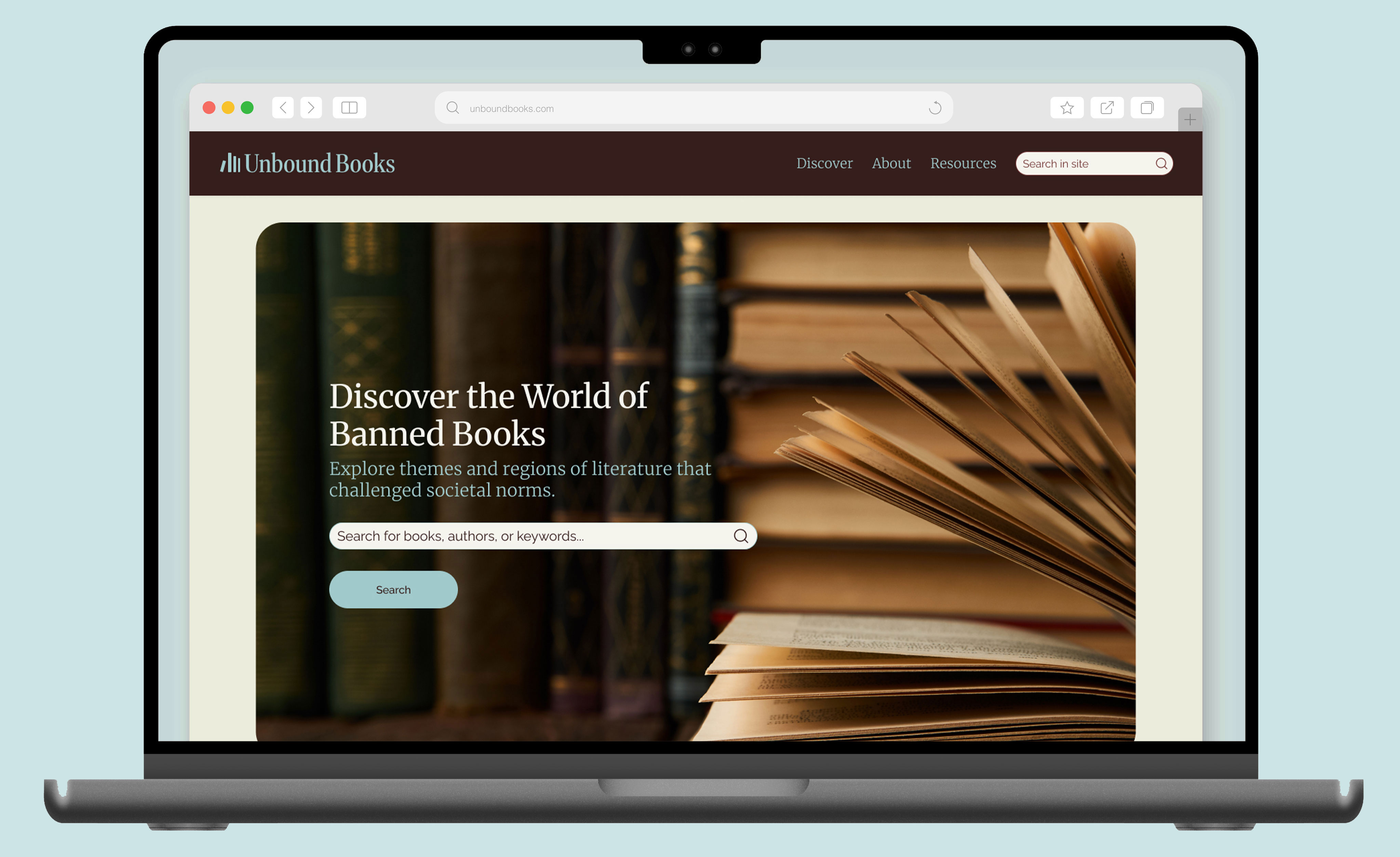
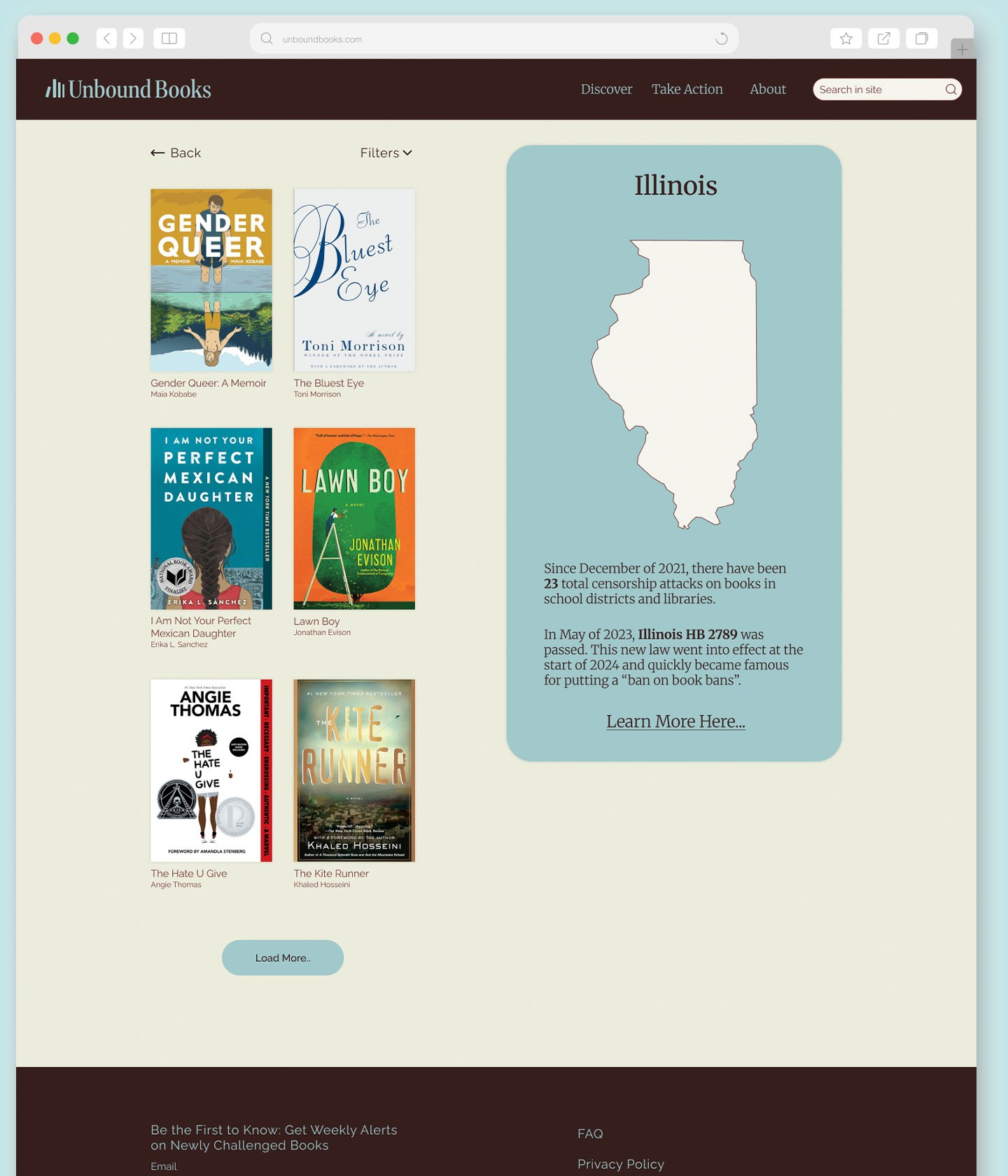
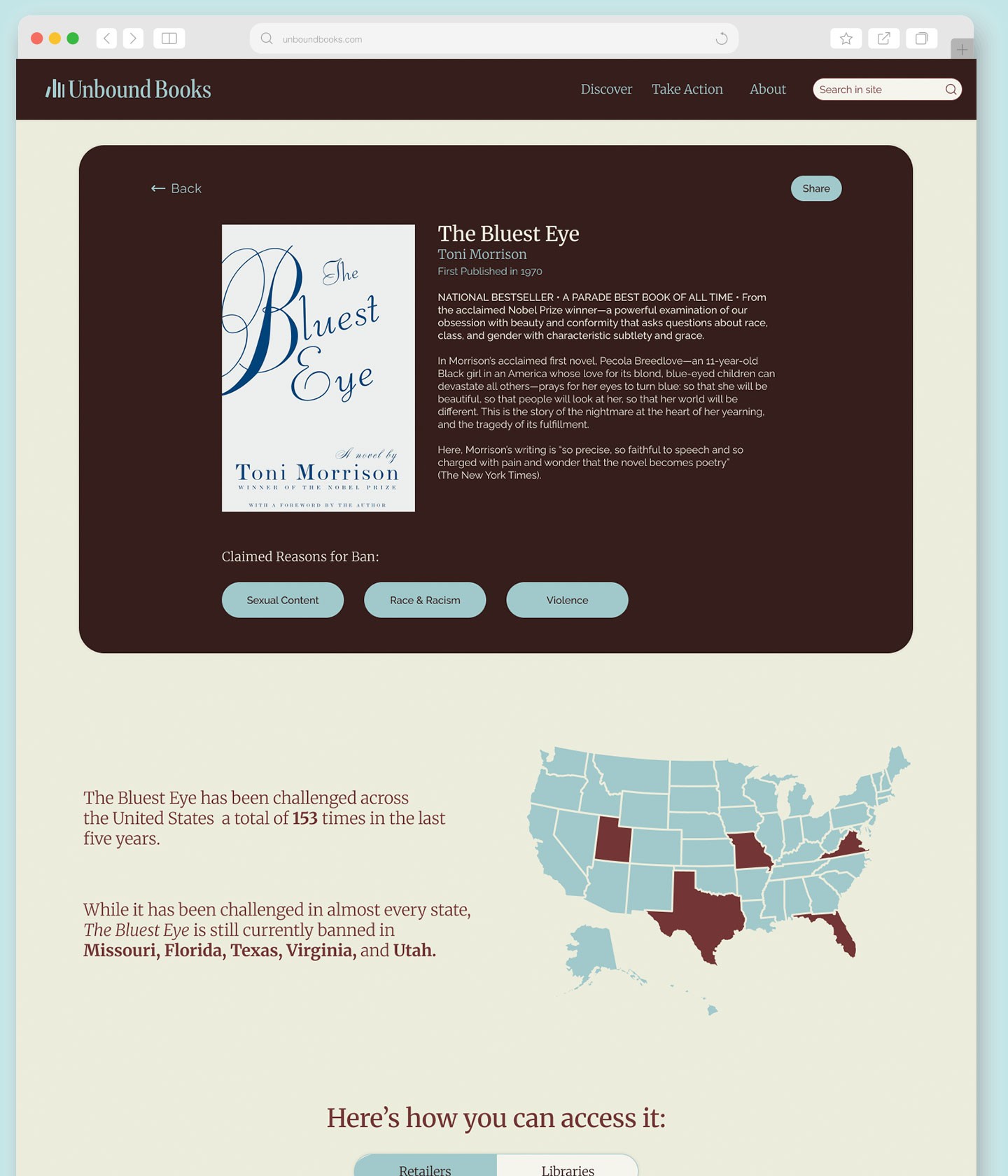
Unbound Books is a digital platform that helps users explore banned or challenged books, understand where and why they are restricted, and find accessible ways to read them.
Project Type
UI / UX Design
Year
2025
Role
Lead Designer/Researcher
Duration
4 weeks
Problem
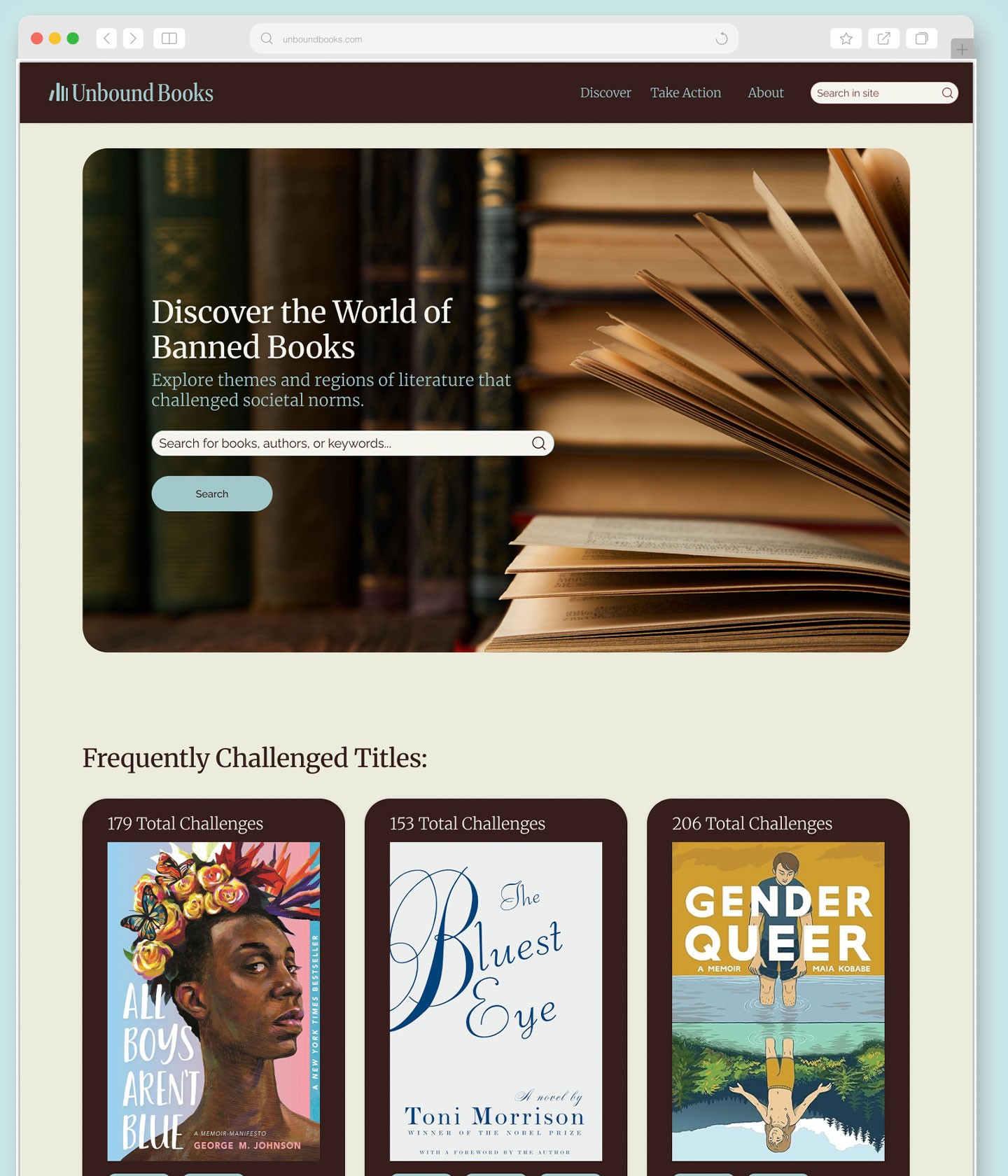
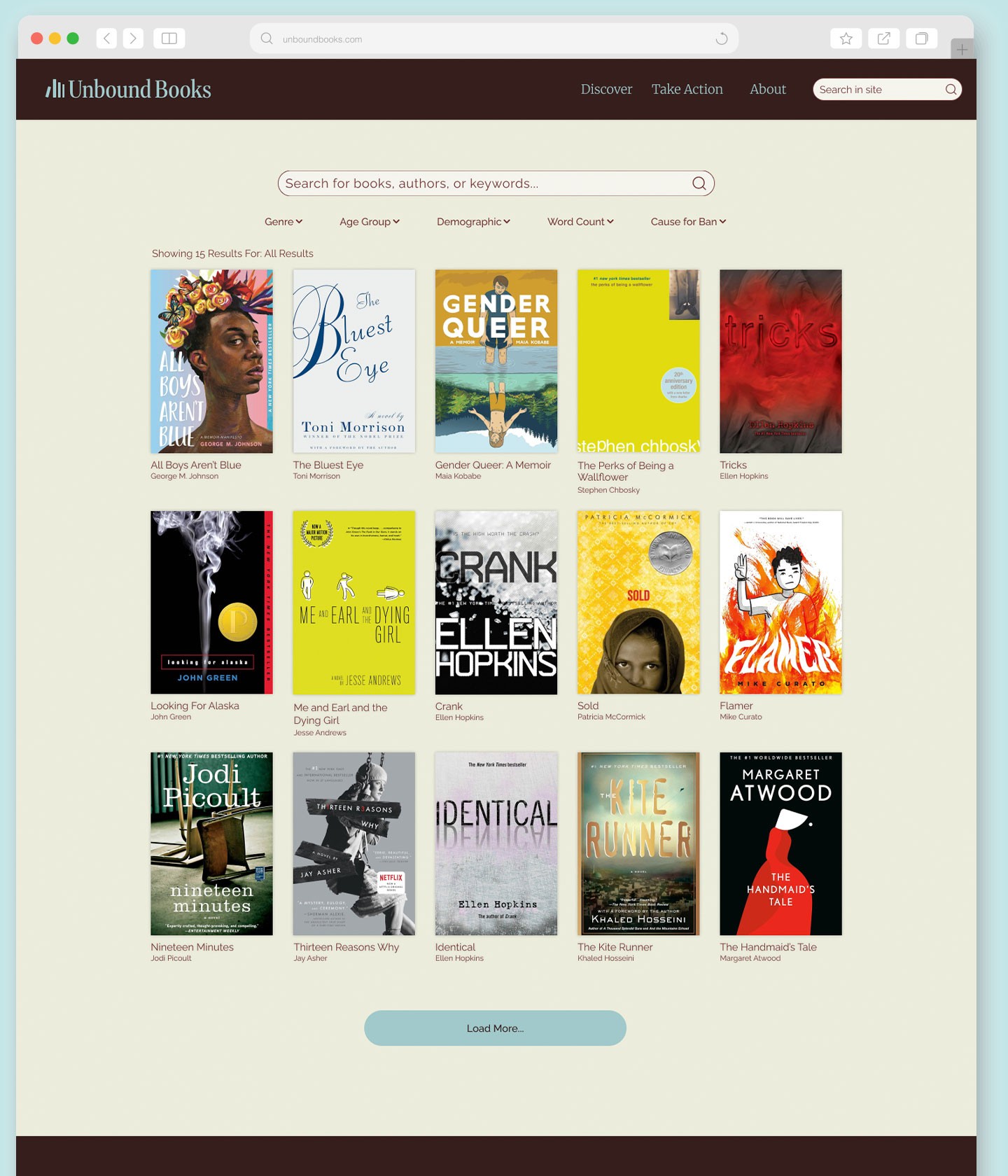
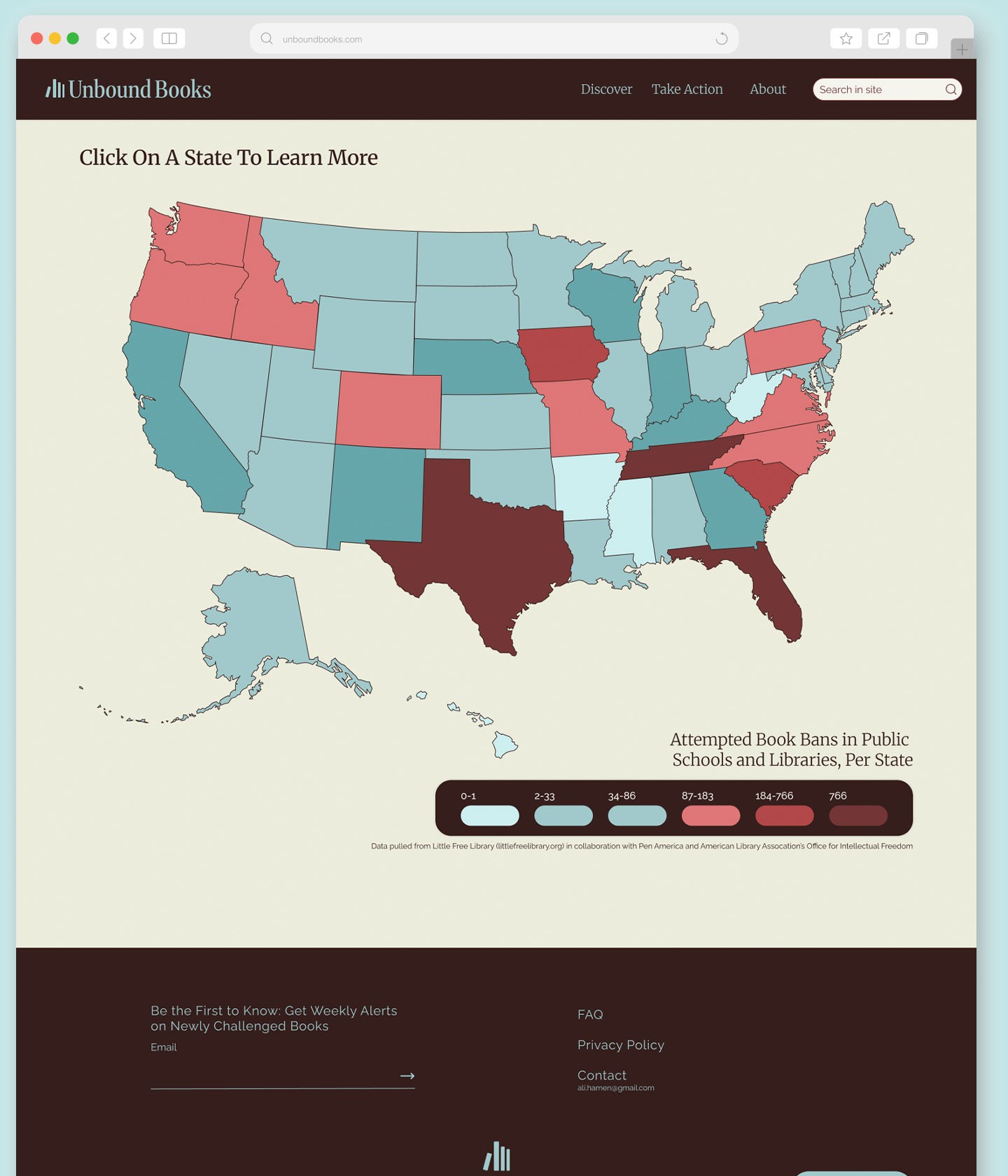
Book bans restrict diverse voices, and users lack an accessible way to see where these bans occur or how to access the books.
Solution
Create a clear, user-friendly way for readers to understand which books are banned in the U.S. and easily access reliable information all in one place.
Research Methods
Interviews
6 Students from my hometown in Ohio Conducted on Google Forms
Interview Findings
Limited Access After Removal
Access to a title becomes difficult after it is removed from local libraries and resources
Inconsistent Information
Information is inconsistent, with no one tool that is used for finding and access banned status on a title.
Limited Access After Removal
Reasons for bans are unclear, leaving users unaware of why a book was challenged in the first place.
Logo Design
The name "Unbound Books" plays on the idea of books being unbanned and unrestricted to readers. It intends to reflect the idea of free information and strengthen the idea of making challenged stories accessible.

To view the full case study, please open the website on a larger browser!
Fall 2025
Unbound Books
Project Overview
Unbound Books is a digital platform that helps users explore banned or challenged books, understand where and why they are restricted, and find accessible ways to read them.
Project Type
UI / UX Design
Year
2025
Role
Lead Designer/Researcher
Duration
4 weeks
Problem
Book bans restrict diverse voices, and users lack an accessible way to see where these bans occur or how to access the books.
Solution
Create a clear, user-friendly way for readers to understand which books are banned in the U.S. and easily access reliable information all in one place.
Research Methods
Interviews
6 Students from my hometown in Ohio Conducted on Google Forms
Interview Findings
Limited Access After Removal
Access to a title becomes difficult after it is removed from local libraries and resources
Inconsistent Information
Information is inconsistent, with no one tool that is used for finding and access banned status on a title.
Limited Access After Removal
Reasons for bans are unclear, leaving users unaware of why a book was challenged in the first place.
Identity Design
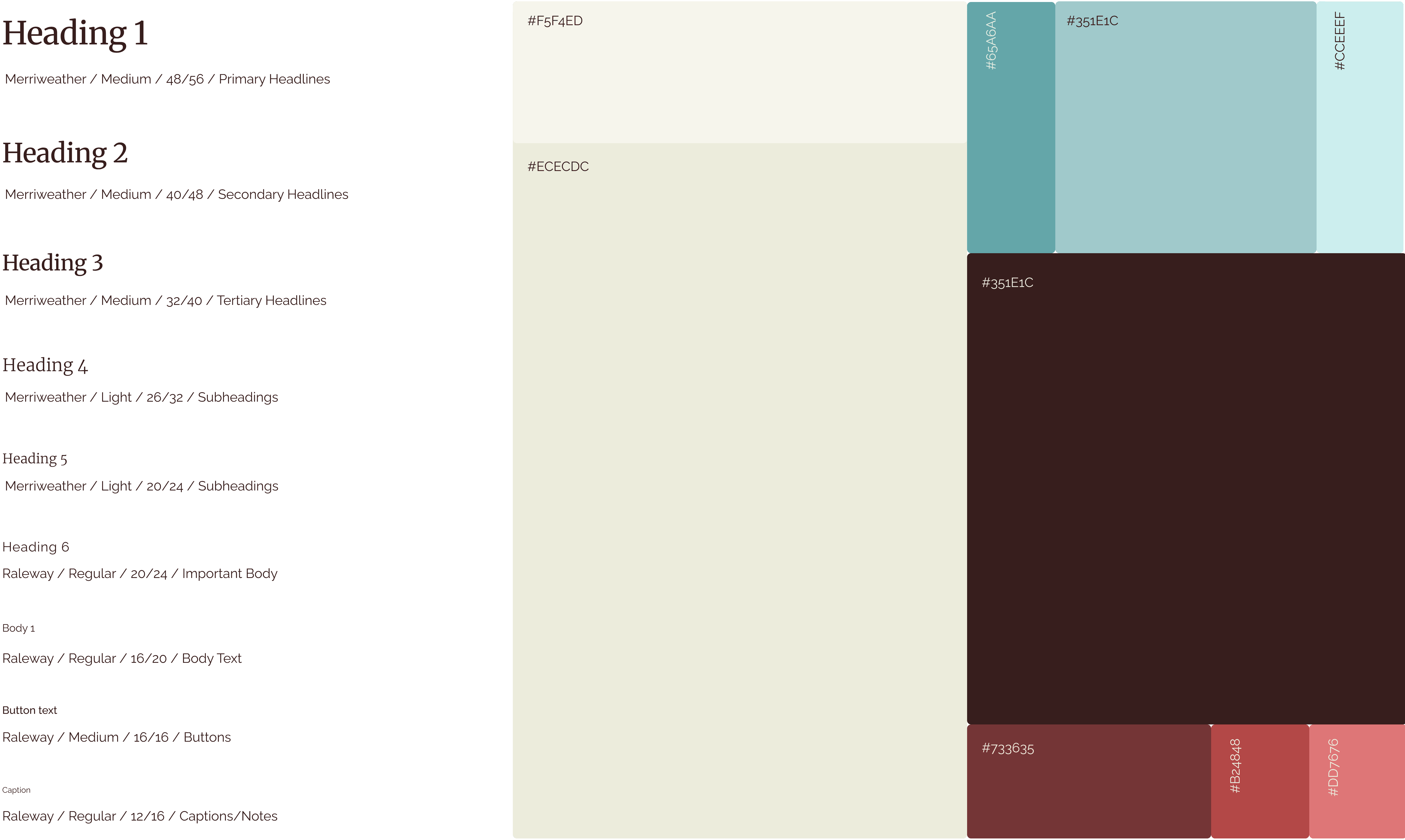
The name "Unbound Books" plays on the idea of books being unbanned and unrestricted to readers. It intends to reflect the idea of free information and strengthen the idea of making challenged stories accessible.
My Process
The following sections of the case study break down each stage of the design process, from defining the problem to ideation, testing, and refining, showing how the concept evolved into the final prototype.
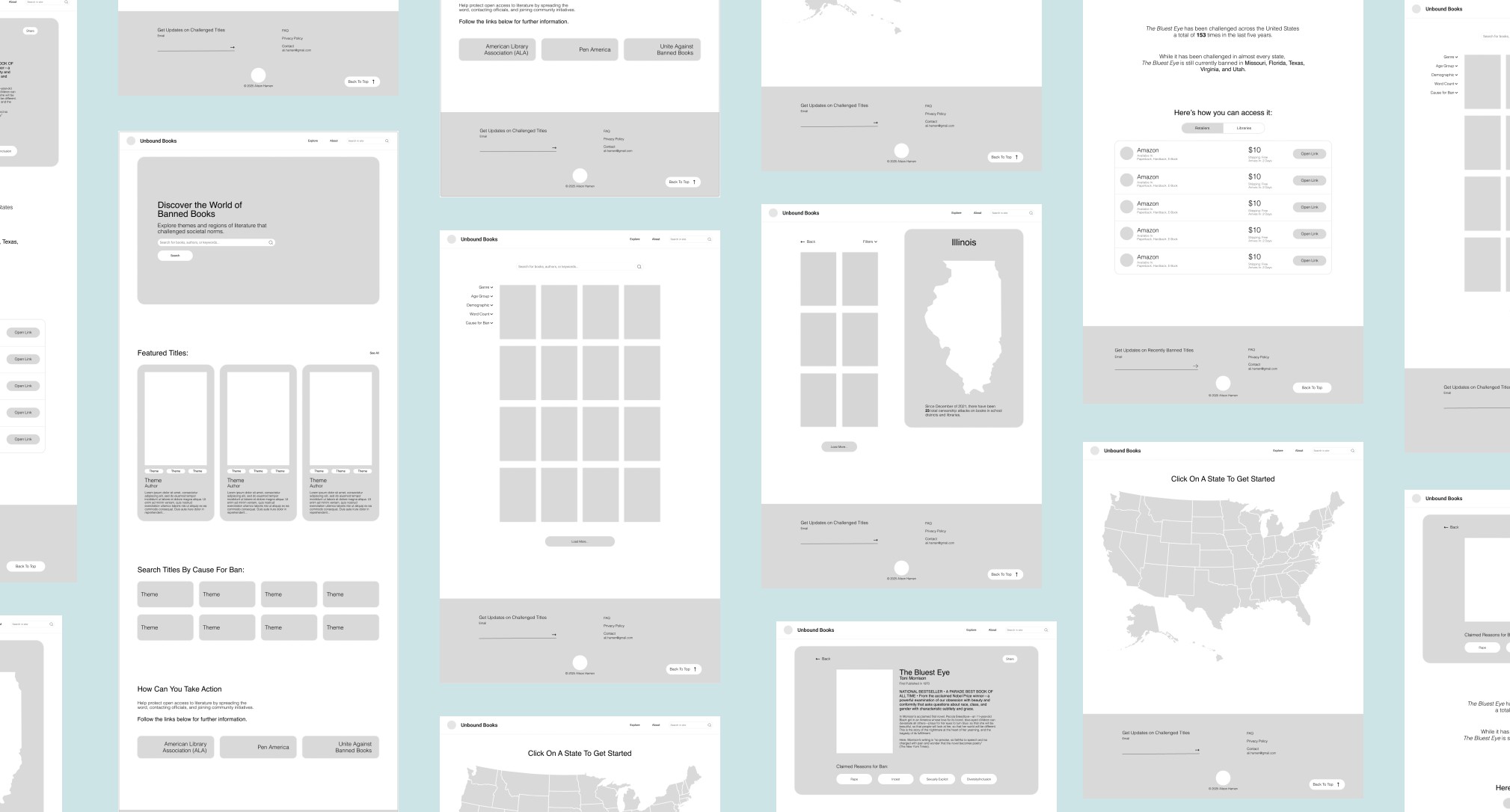
Mid-Fi Wireframes
User Flow Map
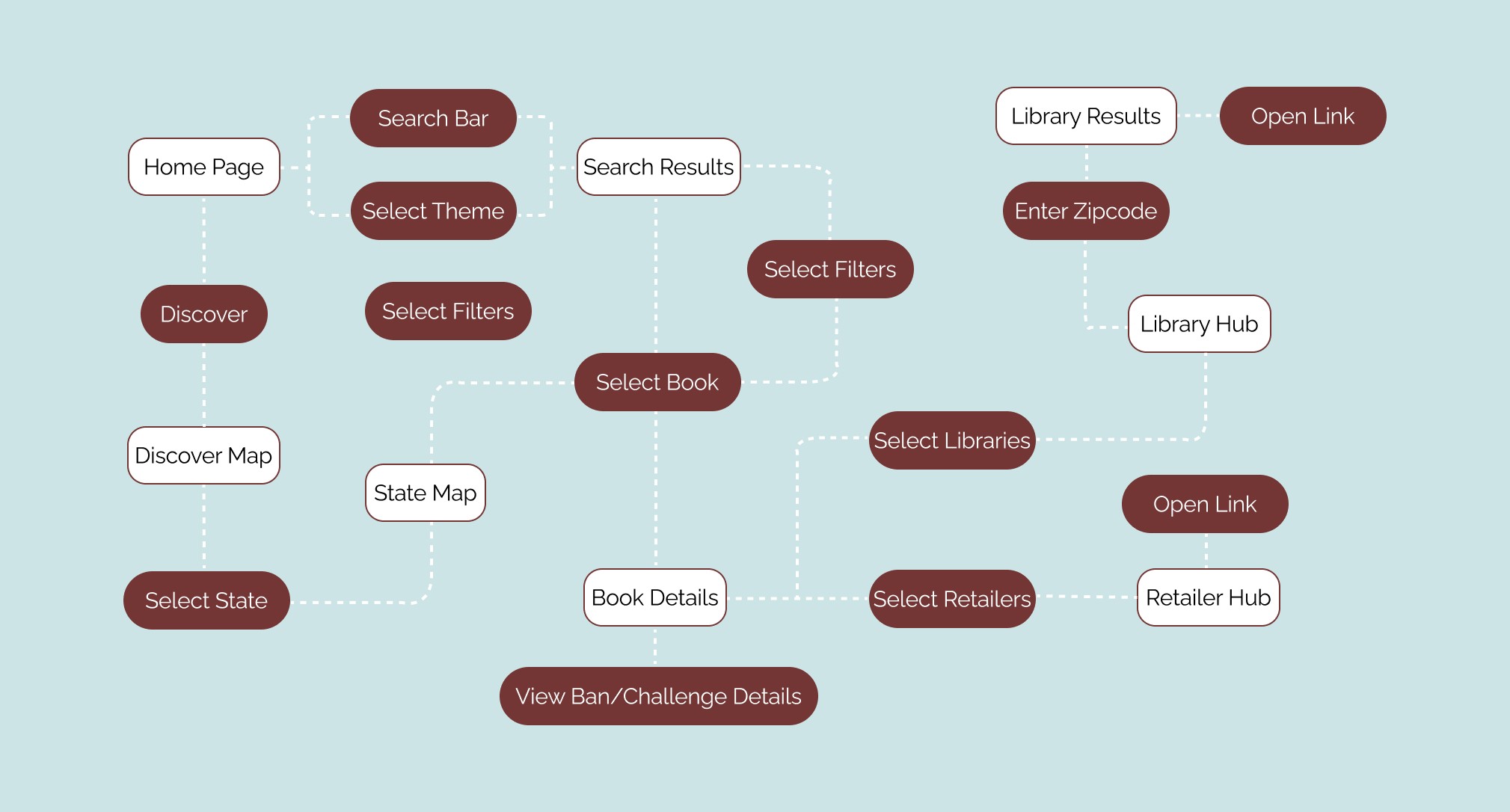
To emphasize the goal of discovery and access, I mapped how users would move from the homepage to finding a specific book or exploring regional censored titles. With this user flow as a starting point, I explored how different entry points, such as search, featured titles, or regional browsing, might affect the paths users take to reach book details, understand ban reasons, and find ways to access each title.
Impact
Unbound Books helps users quickly understand which books are banned, why, and where, giving them clear directions to access these titles. It makes complicated censorship information easier to understand, supporting informed and empowered reading
Reflection
This project emphasized the importance of designing for sensitive topics and presenting information in a digestible way for all users. I also learned how early feedback and simplified flows can clarify complex data for everyday users. In the future, I would conduct more thorough user testing to enforce interactions, expand the dataset, and add a user profile system so users could create saved book lists and set alerts for new bans to make the experience even more engaging.
Fall 2025
Unbound Books
Project Overview
Unbound Books is a digital platform that helps users explore banned or challenged books, understand where and why they are restricted, and find accessible ways to read them.
Project Type
UI / UX Design
Year
2025
Role
Lead Designer/Researcher
Duration
5 weeks
Problem
Book bans restrict diverse voices, and users lack an accessible way to see where these bans occur or how to access the books.
Solution
Create a clear, user-friendly way for readers to understand which books are banned in the U.S. and easily access reliable information all in one place.
Research Methods
Interviews
6 Students from my hometown in Ohio Conducted on Google Forms
Interview Findings
Limited Access After Removal
Access to a title becomes difficult after it is removed from local libraries and resources
Inconsistent Information
Information is inconsistent, with no one tool that is used for finding and access banned status on a title.
Limited Access After Removal
Reasons for bans are unclear, leaving users unaware of why a book was challenged in the first place.
Identity Design
The name "Unbound Books" plays on the idea of books being unbanned and unrestricted to readers. It intends to reflect the idea of free information and strengthen the idea of making challenged stories accessible.
My Process
The following sections of the case study break down each stage of the design process, from defining the problem to ideation, testing, and refining, showing how the concept evolved into the final prototype.
Mid-Fi Wireframes
User Flow Map
To emphasize the goal of discovery and access, I mapped how users would move from the homepage to finding a specific book or exploring regional censored titles. With this user flow as a starting point, I explored how different entry points, such as search, featured titles, or regional browsing, might affect the paths users take to reach book details, understand ban reasons, and find ways to access each title.
Impact
Unbound Books helps users quickly understand which books are banned, why, and where, giving them clear directions to access these titles. It makes complicated censorship information easier to understand, supporting informed and empowered reading
Reflection
This project emphasized the importance of designing for sensitive topics and presenting information in a digestible way for all users. I also learned how early feedback and simplified flows can clarify complex data for everyday users. In the future, I would conduct more thorough user testing to enforce interactions, expand the dataset, and add a user profile system so users could create saved book lists and set alerts for new bans to make the experience even more engaging.
Fall 2025